What exactly is Zink photo paper? What is the difference to conventional instant images? What are the advantages and where is it used? All answers are here!
How does Zink photo paper work?
Zinc photo paper is in a broader sense an instant photo technique. Thus, for example, photos can be put on paper on the move without the classic development process within a very short time. In contrast to conventional instant images such as those produced by the popular Instax Mini 11, ink is not used at all. Hence the name Zink – an acronym from zero and ink.

The technique
The ink-free printing is made possible by special crystals. They are already contained in the sheet in different layers, so that a 2 x 3 inch photo contains up to 100 billion crystals (in the colour composition magenta, yellow and cyan). These crystals are initially colourless. By the effect of impulses of different temperature or duration, a special layer with the desired colour is achieved in each case. The crystals of this layer melt. As soon as they harden again, the colour becomes visible. The layers are composed as follows:
- Yellow layer
- Magenta layer
- Transparent layer
- Cyan layer
- Base layer
- Adhesive layer
- Covering layer
Zinc photo paper – pros and cons
Due to the absence of ink, the photo paper is comparatively insensitive, and handling is correspondingly easy. Moreover, Zink photo paper is cheaper, especially compared to some instant photos. The adhesive layer turns the photos into practical stickers if desired. Compared to ink processes, Zink technology is also considered to be more environmentally friendly. An often mentioned disadvantage is the slightly poorer image quality due to the slightly weaker colour reproduction.
Use and variants
Zink photo paper is used today in many different systems. Most of them are instant cameras or mobile printers. For example, the popular Canon Zoemini S uses Zink, as does the instant camera for iPhone from Lifeprint. Thanks to the lack of ink technology, devices can be made considerably more compact and lighter by using Zink printing. Zink photo paper is distributed by various manufacturers to their devices, including:
Formats;
- 2 x 3
- 3.25 x 4.5
- 3 x 4
- 3.5 x 4.25
- 2.3 x 3.4
Printers and Instant Cameras on InstantCamera.org using Zink
Who invented it?
Photo paper was originally invented in the 1990s by a subsidiary of Polaroid. In 2007, the then independent company Zink presented its technology to the public. The already mentioned companies like Kodak or Fujifilm distribute Zink photographic paper under a license.
Vegan Instant Film
Unlike Instax Mini or Polaroid i-Type film, Zink film is vegan. This means that no animal products are used for production. Normal instant film uses gelatine.
Zink vs. Instax?
A common question: What is the difference between Zink and Instax? Instax films are classic instant film: chemicals within the photo react to show the colors. When the photo comes out of the camera, it still needs some time to develop, while Zink photos are already finished when they come out. Instax photos also have that classic “Polaroid” look, while Zink has a more paper-like look. Th latter is more durable though, waterproof and has a sticky back.
Conclusion
Zink photo paper is an interesting alternative to conventional Polaroid cameras and their photos. Especially the use in mobile printers offers a number of advantages. One is that the photos can be sorted out before printing. Fans of classic instant photos will still prefer models like the Polaroid Now or Fujifilm’s Instax Mini 90 because of the format and colour reproduction.
Source: https://en.wikipedia.org/wiki/Zink_(technology)
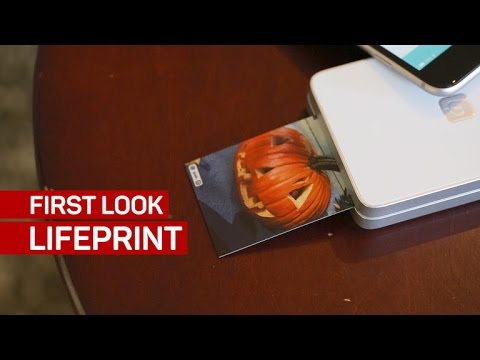
VIDEO: Zink photopaper in action with the Lifeprint instant camera for iPhone